 Credit:
Reviewed / Timothy Renzi
The Best Smart Bird Feeders of 2026
Products are chosen independently by our editors. Purchases made through our links may earn us a commission.
Credit:
Reviewed / Timothy Renzi
Why trust Reviewed?
Reviewed's mission is to help you buy the best stuff and get the most out of what you already own. Our team of product experts thoroughly vet every product we recommend to help you cut through the clutter and find what you need.
Learn more about our product testing
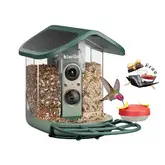
Kiwibit Bird Feeder 2 Pro 4K AI Camera with Solar Panel
Pros
- Simple setup
- 4K video with slow-motion
- Slide-off hopper
- Easy-to-use app
- AI bird identification
Cons
- AI features need a subscription
- Too many notifications
- Alarms don’t deter squirrels
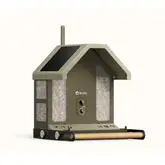
Birdfy Feeder Metal 2 4K
Stands up to the jaws of squirrels and raccoons, ensuring only birds get fed. It's the heaviest feeder we've tested, but it's also the sturdiest. Read More
Pros
- Chew-proof all-metal body
- True 4K video
- Dual-band Wi-Fi
- Built-in solar roof
Cons
- Heaviest feeder we considered
- AI needs a plan on the base model
- Larger animals were able to knock off the feed tray protector
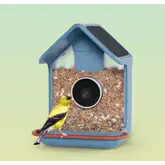
Birdbuddy Home
From its camera resolution to its bird identification process to its new design, this is the best Birdbuddy fsmart feeder yet. Read More
Pros
- Identifies birds by song
- Dual solar, dual-band Wi-Fi
- Rotating camera
- Camera much improved over previous designs
Cons
- Auto ID costs $98.99 a year
- Plastic is squirrel-chewable
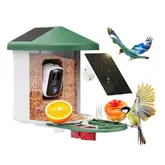
Harymor Smart Bird Feeder with Camera
Sturdy and easy to fill, this smart bird feeder comes with three solar panels and a video camera that delivers clear, crisp images. Read More
Pros
- Much cheaper than competing birdfeeders
- Easy setup
- Solid IDs
Cons
- App is basic
- Too many notifications

Birdbuddy Hummingbird Feeder Pro Solar
Birdbuddy's hummingbird feeder sets a high bar across the industry with top-quality photo and video capture, even for fast-moving birds. Read More
Pros
- High-quality photos and videos
- Excellent bird ID
- Easy to use
- Doesn't allow in insects
- Solar powered
Cons
- Can get flooded with rainwater
-
Kiwibit Bird Feeder 2 Pro 4K AI Camera with Solar Panel
-
Birdfy Feeder Metal 2 4K
-
Birdbuddy Home
-
Harymor Smart Bird Feeder with Camera
-
Birdbuddy Hummingbird Feeder Pro Solar
-
Other smart bird feeders we tested
-
Smart bird feeders, compared
-
How to choose the best smart bird feeder
-
Which smart bird feeder is right for you?
-
Tips for getting the best results from a smart bird feeder
-
How much do smart bird feeders cost?
-
What you should know about smart bird feeders
-
Why you should trust our expertise
-
Read more about birds & other backyard hobbies on Reviewed
- Best Smart Bird Feeder Overall Kiwibit Bird Feeder 2 Pro 4K AI Camera with Solar Panel
- Best Squirrel-Resistant Smart Bird Feeder Birdfy Feeder Metal 2 4K
- Best Smart Bird Feeder With Birdsong ID Birdbuddy Home
- Best Budget Smart Feeder Harymor Smart Bird Feeder with Camera
- Best Smart Hummingbird Feeder Birdbuddy Hummingbird Feeder Pro Solar
- Other smart bird feeders we tested
- Smart bird feeders, compared
- How to choose the best smart bird feeder
- Which smart bird feeder is right for you?
- Tips for getting the best results from a smart bird feeder
- How much do smart bird feeders cost?
- What you should know about smart bird feeders
- Why you should trust our expertise
- Read more about birds & other backyard hobbies on Reviewed


The Rundown
- Our favorite smart bird feeders are the Kiwibit Bird Feeder 2 Pro and the Birdfy Feeder Metal 2 4K.
- These feeders offer excellent 4K video, reliable solar charging, and advanced AI for bird identification, enhancing your birdwatching experience.
- Consider chew-proof designs and dual-band Wi-Fi for optimal performance, but be aware that many AI features require a paid subscription.
Welcome to our backyard/makeshift outdoor testing lab. We tangled with solar panels, wall-mount brackets, solid trees, and a few bird feeder poles to research the best smart bird feeders on the market. We also charged a lot of batteries, messed around with AI recognition, and set up enough security cameras to rival the CIA.
But testing smart bird feeders didn’t go as planned. While we imagined this would be an idyllic time with birdsong and soaring cardinals, we got a battle of wills with a hungry raccoon and squirrels unphased by alarms, bright lights, and cayenne pepper. Yes, we captured numerous feathered friends on camera at our array of bird feeders. We also learned that there are some definite quirks and annoyances to this modern spin on old-fashioned bird feeders.
In the last three years, smart bird feeders have come a long way. The newest crop shoots 4K video, IDs birds by their song, and runs for weeks on a sliver of sunlight. They also span a wide range of prices, from about $80 to well over $200, and nearly every brand now wants a monthly fee to tell you which bird you're looking at.
Soaring to the front of the flock is the Kiwibit Bird Feeder 2 Pro (available at Amazon for $219.99) , which wins our Best Smart Bird Feeder overall award for its solar-powered roof, excellent camera, and AI bird recognition. But keep reading, because there are options galore.
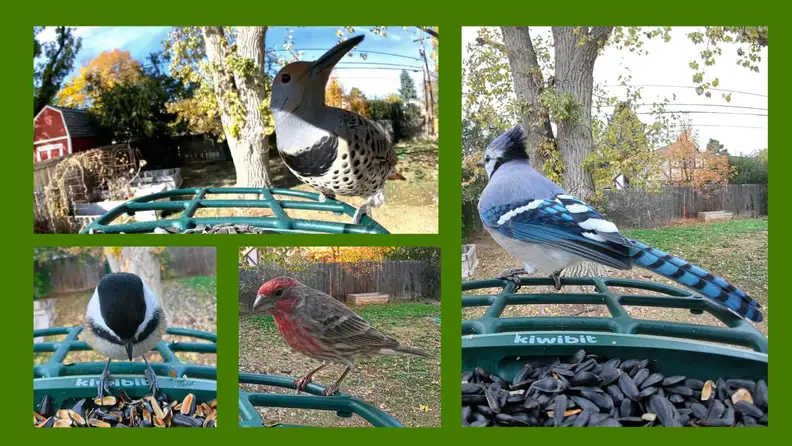

Sharp 4K detail brings out everything from a flicker’s spotted breast to a blue jay’s barred tail.
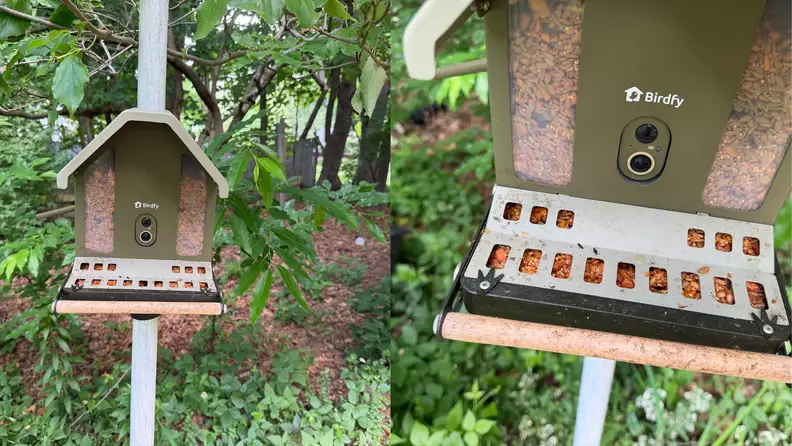
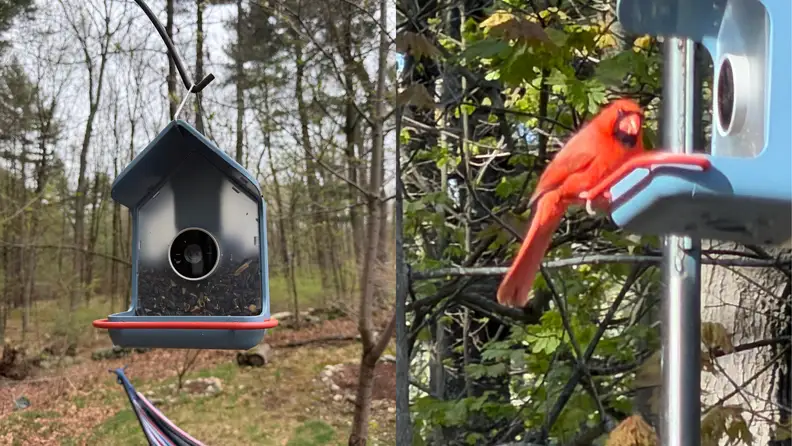
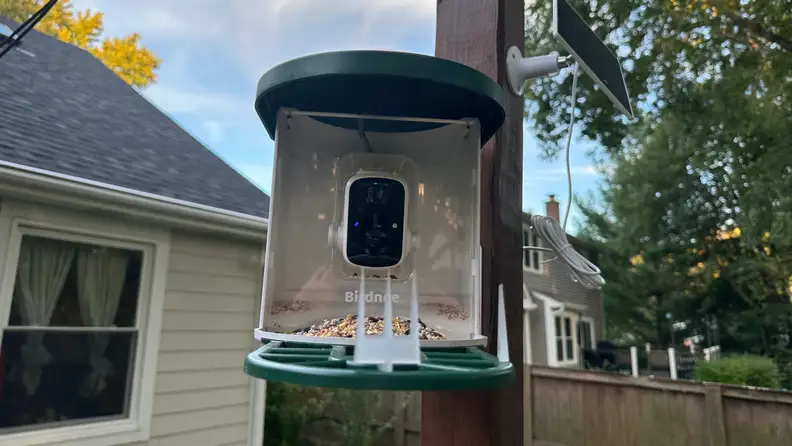

After the feeder went up on a post near the patio, the birds, and the notifications, started rolling in.

Bird Buddy's Smart Hummingbird Feeder Pro again sets the standard in the smart bird feeder industry with a high-quality camera that wows.
Other smart bird feeders we tested
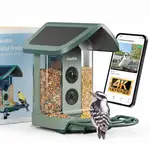
Pros
-
Durable build quality
-
Excellent AI identification
-
Built-in solar panels
-
4K HD camera quality
Cons
-
Notification overload
-
No hanging mechanism for mounting
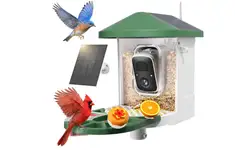
Pros
-
Costs less than our budget pick
-
Squirrel mesh and siren
-
Drainage holes in the seed tray
-
Accessories for fruit, jelly, and nectar included
Cons
-
Feels flimsy
-
Smaller 1.5-liter seed capacity
-
AI bird ID requires a subscription
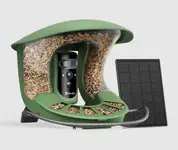
Pros
-
Two camera angles
-
Largest hopper here
-
100fps slow motion
Cons
-
2.4GHz Wi-Fi only
-
No local storage
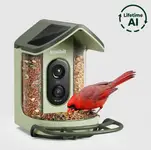
Pros
-
4K camera at a midrange price
-
Compact footprint
-
microSD storage
-
Built-in solar panel
Cons
-
Small hopper
-
AI ID costs extra

Pros
-
Low price
-
Portrait video mode
-
Light, window-friendly build
Cons
-
1080p video
-
No low-battery alert
-
Does not include a solar panel

The FeatherSnap Scout smart bird feeder has many pros. It has not one but two compartments for different birdseed, and they're easily accessible under the roof. It also securely snaps shut, making it hard for a raccoon to open. Everything you need to mount the feeder to a tree is included. Camera clarity, both day and night on its live feed, as well as both video and snapshot capture, is excellent.

You can identify birds two ways with the FeatherSnap app: First, manually, or second, with AI software.
What sets this smart bird feeder apart from the rest is its bird-identification app. While others in our test pool use software that examines a photo of a visiting bird, the Scout's app asks the user if they recognize the bird species. If not, the user can choose to identify using Bird ID (a series of questions the user answers manually to generate an ID) or AI (which displays a grid of potential candidates for the user to match). Once ID'd, the user can save it to the app's Bird Book. While this is an interesting method of identification, it leaves much more room for error, especially for a user just starting out in birdwatching as a hobby.
The FeatherSnap Scout's only true con is that it's easy for squirrels to squirrel-watch, thanks to its wide base, sturdy perch, and generous feed holes. We had a squirrel clean this feeder out over a few hours one afternoon.
Pros
-
Sturdy
-
Includes solar panels
-
Two seed dispensers
Cons
-
Clunky approach to AI bird ID
-
Easy access for squirrels

Pros
-
Very sturdy
-
Stands up to critters
-
Excellent camera quality
-
Solar panel included
Cons
-
Inaccurate AI recognition
-
Bamboo material does not stand up to weather
-
Heavy to mount
Smart bird feeders, compared
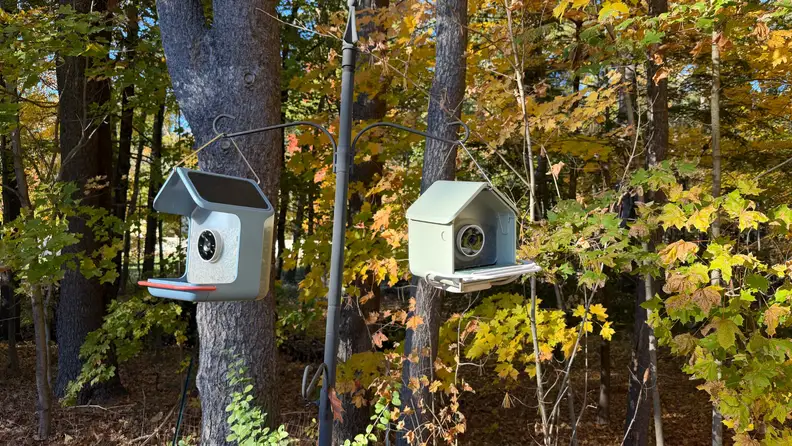
On the left, the Birdbuddy Home model compared to its little sister, the Birdbuddy Nook model on the right, both released in 2026.
| Model | Camera Resolution | Power Source | Bird ID Features | Subscription Required | Price Range |
|---|---|---|---|---|---|
| Kiwibit Bird Feeder 2 4K AI Camera | 4K HD | Solar roof with battery backup | Yes (AI-assisted) | For AI ID ($4.49 a month) | $$$ |
| Birdfy Feeder Metal 2 4K | 4K Ultra HD | Built-in solar roof, 9,000mAh battery | Yes (AI-assisted, 6,000-plus species) | Depends on version (subscription or lifetime AI) | $$$ |
| Birdbuddy Home | 2K HDR video, 5MP photos | Dual built-in solar panels, 3,900mAh battery | Yes (AI-assisted, by sight and song) | For automatic ID ($98.99 a year) | $$$ |
| Harymor Bird Feeder with Camera | 2K HD | Two roof solar panels plus external panel | Yes (Birdnee app, mostly accurate) | For AI ID (from $49.99 a year) | $$ |
| Bird Buddy Smart Hummingbird Feeder Pro | 2K HD | Solar roof | Yes (AI-assisted) | Varies | $$$ |
| Birdfy Feeder 2 Pro | Dual cameras: 2K and 1080p | Included 3W solar panel, 9,000mAh battery | Yes (AI-assisted, 6,000-plus species) | Yes, after seven-day trial ($79.99 a year) | $$$ |
| Kiwibit Bird Feeder 2 Mini | 4K HDR | Built-in 1.8W solar panel, 4,500mAh battery | Yes (AI-assisted, 10,000-plus species) | For AI ID, unless you buy the Lifetime AI version | $$ |
| Birdfy Feeder Rookie | 1080p HD | 5,200mAh rechargeable battery [TK: solar] | Yes (AI-assisted, 6,000-plus species) | [TK: verify lifetime vs. subscription AI] | $$ |
| FeatherSnap Scout | 1080p HD | Solar roof | Yes (manual + AI-assisted) | Varies | $$ |
| Netvue Birdfy Bamboo Feeder | 2K HD | Battery, solar panel included | Yes (AI-assisted) | Optional (app has free/paid tiers) | $$$ |
Price key: $$ = Under $200; $$$ = $200–$300; $$$$ = $300+
Note: Some features, including cloud storage and bird identification, may require a paid subscription.
If you're still deciding, the sections below explain which features matter most and how much you can expect to spend.
How to choose the best smart bird feeder
Smart bird feeders pair traditional feeding with cameras, apps, and notifications that let you see birds up close. While features vary by model, these are the most important things to consider before buying.
Camera quality
Most smart bird feeders offer 1080p or 2K resolution, which is enough to identify birds and capture clear photos and videos. Look for a wide field of view so birds aren't cropped out, and night vision if you want footage after dark (though most birds are active during the day). Placement and lighting often matter more than resolution alone.
Power source
Smart bird feeders typically run on rechargeable batteries, with many offering solar panels to extend battery life. Solar charging works best in yards with consistent sunlight, while battery-only models may need recharging every few weeks, depending on activity.
App & notifications
The app controls how often you interact with your feeder. The best apps offer:
- Live video streaming
- Motion-triggered notifications
- Easy photo and video downloads
Some features, like cloud storage or bird identification, may require a subscription.
Wi-Fi connectivity
Most smart bird feeders use 2.4GHz Wi-Fi. If your feeder is far from your router, notifications may be delayed or unreliable, so strong outdoor Wi-Fi coverage is key.
Seed capacity & design
Larger seed reservoirs mean fewer refills, while feeder design affects how many birds can eat at once and whether larger birds block the camera. Easy refilling and cleaning also make a big difference in day-to-day use.
Which smart bird feeder is right for you?
Different feeders work better for different types of birdwatchers.
- Casual birdwatchers: Simple models with reliable notifications and easy apps are often the best choice.
- Birding hobbyists: Higher-resolution cameras and more accurate identification features are better for frequent use.
- Hummingbird fans: Choose feeders designed for nectar, with cameras positioned close to feeding ports.
- Small yards or balconies: Compact feeders with wall- or pole-mount options work best in tight spaces.
- Families: Feeders with sharing features and intuitive apps are easier for multiple users.
Tips for getting the best results from a smart bird feeder
Use the right bird seed
Black oil sunflower seed attracts the widest variety of birds, while nyjer seed is ideal for finches. Avoid low-quality mixes with filler grains birds tend to discard.
Place your feeder carefully
Mount feeders 5 to 10 feet off the ground near shrubs or trees so birds have nearby cover, but keep enough distance to deter predators. Avoid pointing the camera directly into the sun to reduce glare.
Limit squirrels & other pests
Baffles, squirrel-resistant mounts, and careful placement can reduce unwanted visitors. Cleaning up spilled seed also helps.
Keep it clean
Clean feeding ports regularly and wipe down the camera lens after storms. Keeping the feeder clean helps protect birds and improves video quality.
How much do smart bird feeders cost?
Smart bird feeders cost significantly more than traditional feeders, but pricing varies by features and performance.
Budget (under $200)
These models usually offer basic HD cameras and limited smart features. Battery life may be shorter, and apps are often simpler, making them best for casual use.
Midrange ($200 to $300)
Most smart bird feeders fall into this category, offering better cameras, more reliable apps, and often solar charging. This tier typically delivers the best balance of price and performance.
Premium ($300+)
High-end models include sharper cameras, faster notifications, and more advanced bird identification tools. They're best for frequent users and dedicated birders.
Keep in mind that some feeders charge ongoing subscription fees for cloud storage or AI-powered features, which can add to the long-term cost.
What you should know about smart bird feeders
What is a smart bird feeder?
A smart bird feeder is a bird feeder with a camera that connects to Wi-Fi and streams video, captures photos, and performs other tricks. It gives you an extremely close-up view of local bird species and their feeding habits, and, in some cases, can identify a bird for you.
Most feeders mount on poles, trees, or other surfaces and are too heavy to hang like more traditional bird feeders. All have apps, some of which are exclusive and others that link into existing smart home security platforms, like VicoHome.
Just like a smartphone, the cameras need to charge via a USB-C cable. All the feeders we tested have solar panels or solar roof options to keep the battery charged longer.
How does a smart bird feeder work?

After charging the camera, pop it right into the Bird Buddy. Other feeders come with camera's permanently installed, but they also come with solar panels for easy charging.
In basic terms, the camera on a smart bird feeder connects wirelessly to your home's internet. It can detect motion and, when it does, turns on and captures an image directly in front of it. Most apps let you select the detection level, from low to high.
Most cameras capture 10-second video clips, though some let you choose a different length.
As for the bird-feeding features of the feeder, it's simple: Fill it with food, and the birds (and squirrels) will find it.
Do bird feeders with cameras have a monthly fee?
It depends. All of the smart bird feeders we tested offer some app functionality for free. A few are completely free, included with the purchase of the smart bird feeder, and others are exclusive to Bird Buddy's app.
Others, such as Birdkiss and Soliom, use VicoHome. This security camera app offers real-time streaming but requires a monthly or annual subscription to save more than the most recent 72 hours of video footage.
How do birds know there is a new bird feeder in the yard?
Reviewed's chief scientist, David Ellerby, Ph.D., has spent years researching bird physiology and is eager to answer some of the birdwatching world's most popular questions, starting with how birds will know about a new feeder in your yard.
"Birds have excellent eyesight, and that's how they track down new food sources," he explains. "If your feeder is hidden away, it will take birds a while to find it."
If you want birds to show up ASAP, place feeders where they can easily see them.
"Even so," says Ellerby, "it could still take birds a few days to learn there's a free meal available in your yard."
How can I identify the birds in my backyard?
Identifying birds can be tricky, and depending on where you live in the world, it will include a variety of species.
Your best bet is to invest in a birding guide, which there are many of.
Ellerby cautions, "Some guides assume you know roughly the type of bird you're dealing with, but if you don't know a finch from a sparrow, that's not much help."
If you're a beginner, Ellerby recommends the National Audubon Society as a great resource, particularly its helpful app.
"The app takes basic information like the location, time of year, and size and color of the bird to narrow down a list of likely species," he says. But when the app examines the feeder's bird photos to identify them, it's not always accurate.
If you prefer a book, field guides for the whole country contain an overwhelming number of species. Guides specific to your region or state are much less intense.
Ellerby's favorites are by the author Stan Tekiela. "He has user-friendly guides for most states that take a simple appearance-based approach to walk you through the bird ID process," he says.
Critters will find it
Consider your environment and your home's location before buying a smart bird feeder; otherwise, you'll have complete anarchy on your hands.
We tested smart bird feeders in a suburban neighborhood that leans slightly more toward the rural than the urban end of the scale. We had about four days of bird euphoria during our three weeks of testing before critters infiltrated the feeders. Unfortunately, we can't say we were surprised.
Of the half-dozen feeders we tested, raccoons and squirrels vandalized all of them.
Four of the feeders mount to a vertical surface with flat, metal bracket mounts. Essentially, this means your mounting options include the wall of your house or a tree. Neither is ideal: the former because no one wants to screw into expensive siding on a permanent structure, and the latter because, well, critters live in and climb trees.
The remaining two feeders we tested offer other options—Bird Buddy can be mounted on top of a pole or hung; Netvue Birdfy can be mounted vertically with brackets or on a pole. Squirrels do climb poles, but baffles can block their access, and you can buy a baffle at any home improvement or bird store. Unfortunately, you can't use a baffle on a vertical surface or around a tree, which means nothing prevents a squirrel and raccoon feast. And that means you'll spend a fortune on bird food.
All of the feeders include an array of critter deterrents, such as alarms, sirens, bright white lights, and/or two-way communication, so you can scream at them—and we did. These tactics rarely worked during our testing, and the squirrel would be back for more minutes later.
Make sure you have a plan before you spend $200 to $300 on a smart bird feeder, or you will regret it.
If watching squirrels and other critters shovel your fancy bird food down their gullets starts to grate, a simple squirrel-proof bird feeder might be the way to go. We like the Squirrel Buster Suet and Squirrel Buster Classic bird feeders.
The solar panels & Wi-Fi antennas break easily

The smart feeders we tested were no match for raccoons and squirrels. Damage included broken solar panel attachments, detached Wi-Fi antennae and bent mountings.
Most models we tested included solar panels with the purchase price of the smart bird feeder. While these solar panels are great for keeping the feeders' batteries charged, visiting raccoons and squirrels often manhandle them or sit on them.
Only one of the solar panels didn't break permanently during our three-week testing period. Critters also often broke the fragile Wi-Fi antennas, leaving them hanging, literally.
Privacy
With smart cameras, including outdoor security cameras, video doorbells, and bird feeders with cameras, come privacy concerns, especially when you're using a camera around your home that can record visitors, neighbors, and passersby without their knowledge. Be mindful of where you place it in your yard and the content of any clips you post publicly.
While each bird feeder camera has its own privacy practices, make sure to read the fine print on the one you purchase. In the case of the Bird Buddy, the camera range is as good as that of an outdoor security camera, but it doesn't come with the same privacy features, such as motion or privacy zones. These let you define which areas the camera does or does not record, and they're fairly common on video doorbells and most cameras from big brands, including Ring, Blink, and Wyze. Bird Buddy uses end-to-end encryption for recordings, meaning no one else can view or access the clips as they're processed from the camera to the storage server. This keeps it more secure. We can also offer many tips to keep your smart home safe and secure.
Why you should trust our expertise

Mounting the bird feeders to trees or poles is the only physical activity you need to do to enjoy this hobby!
Not to brag, but we spotted this trend before any of our competition and got the jump on it. Our testers have large backyards and an even larger interest in feeding and watching backyard birds. Consequently, there was no need for anything super scientific in our testing process. We mounted each smart bird feeder according to its instructions, synced the camera to a Wi-Fi network, charged the batteries, and filled each feeder with food. Then we waited for the birds to come.
We also looked at special features, such as whether the camera-enabled bird feeders could run on solar power and the apps for each smart bird feeder. We looked at battery life, how easily birds could access the bird food, and whether or not the feeder was critter-proof.
After a couple of weeks of near-constant birdsong, $200 worth of bird food, and some nightly visitors, we had our answers. Not to mention an insider's perspective on all the bird species in New England!
Read more about birds & other backyard hobbies on Reviewed
Meet the testers

Leigh Harrington has 25 years experience as a writer and editor for myriad print and digital publications.
At Reviewed, Harrington manages Reviewed's overall content, including areas of focus like home improvement, cleaning, gardening, cooking, smart home, organization, and parenting. She focuses on developing and editing consumer ed content, product reviews and buying guides, but she also writes, too.
Harrington is also an experienced travel writer, and has authored books including Fodor's Boston, 100 Things to Do in Boston Before You Die, and Colorful Cities Boston, an adult coloring book. She was a respected, longtime regional editorial director at Where travel guide, and has written for other publications including the US News & World Report, USA Today, Boston Herald, Newport Life, Exhale magazine, Huffington Post, and many more. www.leighharrington.com

Jennifer Ernst Beaudry
Freelance Editor, Style and Home
Jennifer Ernst Beaudry was the former Managing Editor of Home at Reviewed, where she oversaw home, garden, laundry, and gift guides. In more than 20 years of covering the consumer market, her work has appeared in USA Today, Footwear Insight, Footwear News, Complex and Solecollector, and more. Read more about her on her website.
Checking our work.
Our team is here to help you buy the best stuff and love what you own. Our writers, editors, and experts obsess over the products we cover to make sure you're confident and satisfied. Have a different opinion about something we recommend? Email us and we'll compare notes.
Shoot us an email