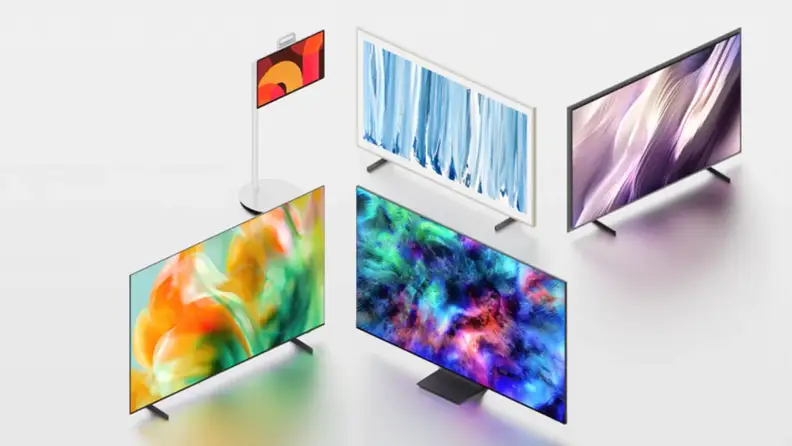
Reviewed's best TVs, headphones, and entertainment gear of 2026
Here's what we're excited about this year

Credit:
Reviewed / LG / Apple / Sony / JBL
November 18, 2026
Products are chosen independently by our editors. Purchases made through our links may earn us a commission.
It's been a great year for good A/V gear—from ultra-high-end audiophile-grade hardware all the way down to budget headphones that still sound good at a much lower price. Throughout the year, we've been personally testing all kinds of products, making sure they live up to the hype, and keeping note of the ones that don't.
There are a ton of worthy contenders, but not every product gets a slot. Here are the best A/V products of 2026.
Most trusted audio brand

Sony’s lineup stays consistent from budget models to flagships, and that consistency is what earns it the title.
Sony's trust rests on a lineup that stays consistent from budget models to flagships. Its wireless range spans earbuds and over-ear headphones. The $459.99 Sony WH-1000XM6 are some of the strongest wireless noise-canceling headphones available—not to mention the WF-1000XM6 earbuds and everything in between.
The range matters just as much as the flagship. Alongside February's WF-1000XM6 earbuds, Sony offers the $299.99 WH-1000XM4C (a refreshed pair of mid-range headphones) and the PS-LX5BT turntable.
Across prices and product types, Sony's lineup is consistent. That consistency, not any single pair of headphones, is what earns the title.
Most trusted TV brand
Samsung makes TVs in several screen technologies and styles, from flagships to art-frame designs.
Samsung's trust rests on scale and long-term support. Omdia, a market research firm, has ranked Samsung the world's top TV brand for 20 consecutive years—an impressive feat given how the industry has changed over the decades.
Samsung's OLED TV sales reached about 2 million units in 2025, up 38.1%, giving the company 31% of that market. More importantly for buyers, Samsung promises up to seven years of software updates for its TV operating system on 2026 TVs and has extended that support to qualifying 2023 models.
The Samsung S95H is among the highest-rated TVs available and one of the brightest OLEDs released so far, while the S90H is also a strong gaming set. Samsung's range spans several screen technologies (Micro RGB, OLED, Neo QLED, and Mini LED), and its soundbars have led the market for many years too.
If you're looking at home-theater tech, you can't go wrong with Samsung, especially at the high end.
2026 Best of Year products
Audio
The Xtreme 5 is great for outdoor listening, with an IP68 rating and a replaceable battery.
The $399.95 JBL Xtreme 5 costs $20 more than the $379.95 Xtreme 4, and the extra money buys useful changes. A redesigned racetrack-shaped woofer and dual tweeters deliver 130W on AC power or 90W on battery. Its IP68 rating means it's dust-tight and protected against water immersion, so a dunk in the pool won't kill it. Bluetooth 6 and Auracast let it broadcast audio to multiple compatible devices.
JBL rates the Xtreme 5 at 24 hours of playback, though real-world results will vary. The Xtreme 5 produces deeper bass and a higher maximum volume than the Xtreme 4. Against the Sony ULT Field 5, its drop-proofing and replaceable battery make it the better outdoor speaker—a difference you'll probably notice on a camping trip.
If you want one speaker for the pool, the trail, and the party, this is it.
Pros
-
IP68 waterproof, dustproof, and drop-proof
-
Up to 28 hrs playtime with Playtime Boost
-
Lossless audio over USB-C
-
Auracast multi-speaker and stereo pairing
-
Built-in power bank
Cons
-
Heavier than ever at 6.4 lbs
-
$20 pricier than the Xtreme 4
-
Ambient lighting may feel gimmicky
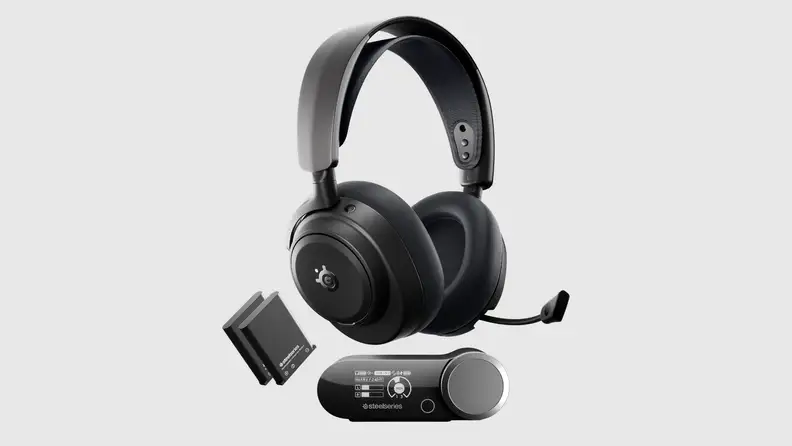
The GameHub base station mixes audio from up to four sources, and the spare battery charges while you play.
The $399.99 SteelSeries Arctis Nova Pro Omni is the gaming headset to buy if you bounce between a PC, a console, and another device. Its GameHub base station can mix four audio sources, and hot-swappable dual batteries let you replace one without stopping play.
Active noise cancellation is solid, especially for a gaming headset, and 96kHz/24-bit wireless audio handles higher-resolution playback. Battery life is great, and if you use the swappable batteries, you can charge the extra one while you use the headset—making battery life effectively unlimited. It sounds excellent, though the default tuning is an acquired taste. Its V-shaped tuning lifts bass and treble, which plenty of people prefer, even if it isn't fully neutral.
The SteelSeries is comfortable, has strong noise cancellation, and offers unusually flexible source routing. Compared with the $599.99 Arctis Nova Elite, it keeps the digital-to-analog converter and swappable batteries for less. If you play on more than one platform, that flexibility is worth the price.
Pros
-
GameHub mixes up to 4 sources (2x USB, Bluetooth, line-in)
-
Works with PC, PlayStation, Xbox, Switch, and mobile
-
Hot-swappable batteries for nonstop play
-
ClearCast Pro mic with AI noise rejection
-
Deep EQ customization via Sonar and app
Cons
-
Expensive at $399.99
-
ANC trails dedicated noise-canceling headphones
-
Weak sub-bass
-
Leatherette pads get warm in long sessions
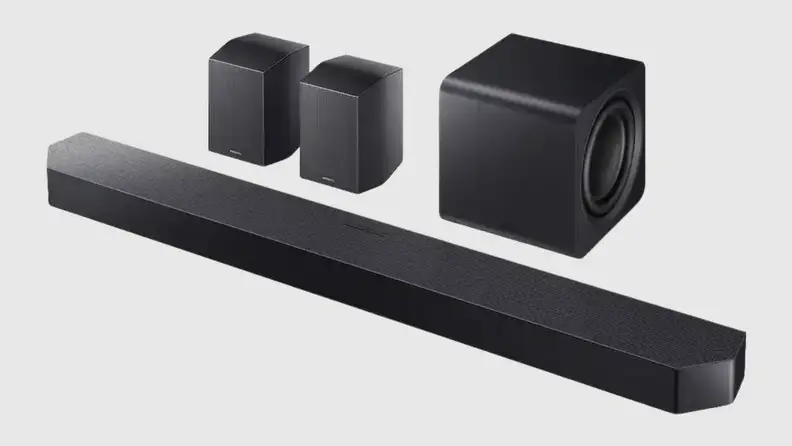
Height channels in the HW-Q990H add overhead effects to Dolby Atmos, DTS:X, and Eclipsa Audio content.
The $1,999 Samsung HW-Q990H is expensive, but if you're looking for a high-end all-in-one sound system, it's worth the cash. In the box, you get an 11.1.4-channel system with 23 drivers, a wireless subwoofer with two 8-inch woofers, and two rear speakers for surround sound.
That's 11 main channels, one sub, and four height channels for overhead effects. Support for Dolby Atmos, DTS:X, and Eclipsa Audio covers three spatial-audio formats that place sounds around and above you.
Two HDMI 2.1 inputs pass through 4K/120Hz video, so you don't have to give up a port on your TV to use the system (in fact, you gain one). Its format support, Dolby Vision passthrough, and software features are what earn it this award.
Pros
-
True 11.1.4-channel setup with rear speakers and sub included
-
Dolby Atmos and DTS:X support
-
Two HDMI 2.1 inputs with 4K/120Hz passthrough
-
Compact wireless subwoofer
-
Q-Symphony pairing with Samsung TVs
Cons
-
Barely changed from the HW-Q990F
-
Last year's model costs far less
-
Best features require a Samsung TV
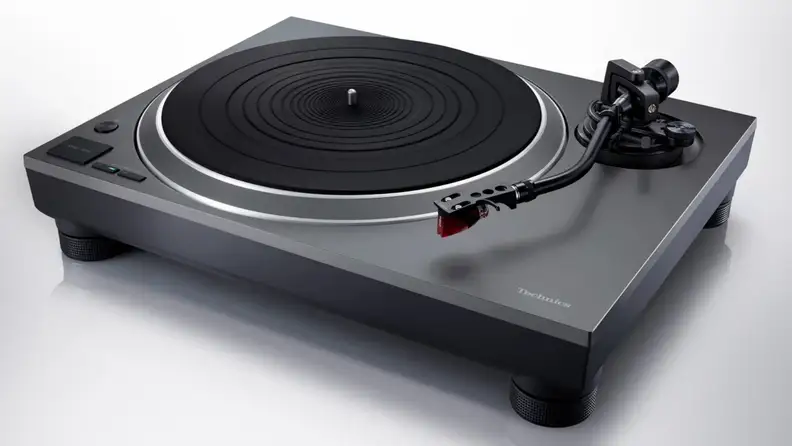
The SL-1500CS comes with an Ortofon 2M Red cartridge already mounted.

For listeners who want a turntable that's ready to play straight out of the box, the Technics SL-1500CS is the one to buy.
The key upgrade for this model is Delta-Sigma Drive motor control, borrowed from the SL-1200GR2 and SL-1300G, which regulates the coreless direct-drive motor to cut vibration and improve rotational accuracy. Technics rates wow and flutter, a measure of speed variation that can affect pitch, at 0.025%, with a 0.7-second start-up. That's solid.
A pre-mounted Ortofon 2M Red cartridge, a built-in moving-magnet phono stage with a bypass switch, an automatic tonearm lift, and 33⅓, 45, and 78rpm speeds make it easy to live with. It sounds noticeably livelier and more detailed than the SL-1500C despite nearly identical construction. Compared to the Rega Planar 3 RS Edition, the Technics offers stronger bass, a built-in phono stage, and semi-automatic operation.
Its motor control and ready-to-play setup are what earn it this award. Technics is proving that the SL-1500 series remains at the top end, many decades after its original launch.
Pros
-
Delta-Sigma Drive coreless motor from pricier Technics decks
-
Built-in phono preamp
-
Ortofon 2M Red cartridge preinstalled
-
Plays 33, 45, and 78 rpm
-
Semi-automatic tonearm lift
Cons
-
$300 more than the SL-1500C
-
Only one finish (metallic gray)
-
No Bluetooth or USB output
Sony's flagship true wireless earbuds pack a lot of features into a compact package. The $329.99 Sony WF-1000XM6 costs $30 more than the WF-1000XM5, but its broader feature set earns the increase. Sony's QN3e processor and eight microphones handle noise cancellation, while 8.4mm drivers (the speaker elements inside each bud), a 10-band equalizer (which lets you adjust bass and treble), wireless charging, and Auracast (which lets you share audio with multiple compatible devices) cover the rest.
The earbuds offer LDAC and LC3 audio codecs for high-resolution listening, plus an 8-hour battery life on a single charge with noise cancellation enabled, which is solid. That's on top of a reasonably comfortable fit.
Thanks to their battery life, comfort, and audio, these are among the best wireless earbuds released so far.
Pros
-
Incredible sound, noise cancellation
-
Comfortable design
-
Up to 24 hours of battery (with case)
Cons
-
Price out of reach for many
-
Not as water- and sweat-resistant as some other earbuds; case not weatherproof
-
Only a couple of colors (and “smoky pink” always seems sold out)
Knit-mesh canopy, memory foam, and telescoping arms give the AirPods Max 2 a genuinely comfortable fit.
Apple's second-generation over-ear headphones add a lot without raising the price. The $549 Apple AirPods Max 2 bring Apple's H2 chip, Adaptive Audio, Conversation Awareness, Live Translation, and Voice Isolation (which focuses the microphones on your voice). They also happen to offer some of the best noise cancellation you can get right now.
They sound excellent, too. They support 24-bit/48kHz lossless audio over USB-C, and their tuning delivers a crisp, detailed sound. Sure, the headphones are expensive, but with all the Apple-focused features and that sound quality, they're worth it for anyone who has a lot of Apple devices.
Pros
-
Really comfortable to wear for long periods of time
-
Excellent audio, noise cancellation
-
Adaptive audio senses when you’re chatting to reduce volume USB-C for lossless audio sources
-
Native Siri support
Cons
-
More expensive than most at $549
-
Powered by Apple Intelligence
-
Live Translation is hit and miss
-
Battery life is good but not great
Video
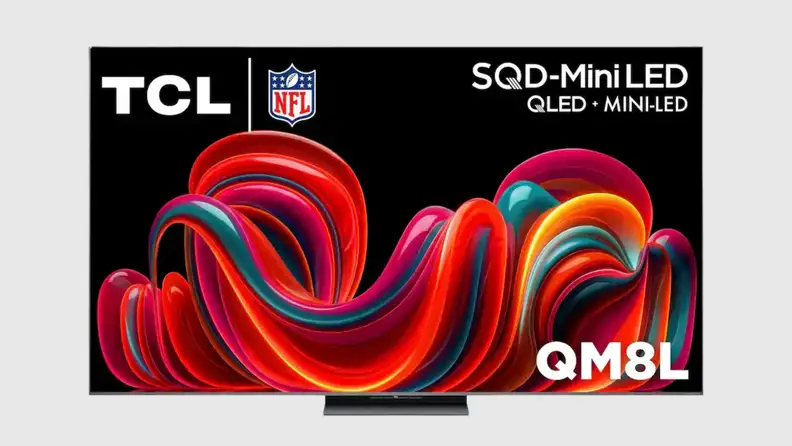
The QM8L’s brightness and local dimming set it apart from other Mini-LED TVs in its class.
The TCL QM8L brings huge brightness down to a surprisingly reasonable price. Its SQD-Mini LED backlight has up to 4,000 local-dimming zones (on the 98-inch model), which independently brighten and darken small parts of the screen.
It reaches a staggering 6,000 nits of peak brightness, and even though you'll get less than that in most real-world use, those HDR highlights will still be vibrant. It's even brighter than TCL's flagship X11L. Four HDMI 2.1 ports support 4K at 144Hz, keeping games responsive. Its brightness and local dimming are what set it apart in this class.
If you want an ultra-bright TV with modern features at a sensible price, the TCL QM8L is hard to beat.
Pros
-
SQD-Mini LED with very high HDR brightness
-
Wide color gamut
-
Four HDMI 2.1 ports with 4K/144Hz
-
ATSC 3.0 tuner
-
Google TV with Gemini
Cons
-
Color accuracy lags out of the box
-
Bulkier than some 2026 rivals
-
Included stand is a weak point
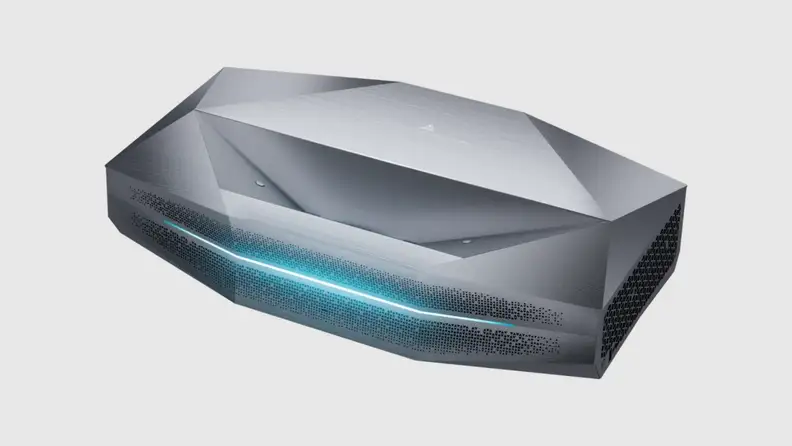
An RGB triple-laser light source powers the Aetherion Max.
The $4,499 Awol Vision Aetherion Max is an ultra-short-throw projector, so it can produce an 80–200-inch image while sitting close to the wall. Its 0.2:1 throw ratio means it needs roughly 0.2 units of distance for every unit of image width.
Awol rates the RGB triple-laser light source at 3,300 ISO lumens and 25,000 hours, with 110% Rec.2020 color coverage. ANSI figures vary by test method, so treat the ISO number as a rough guide. Three HDMI 2.1 inputs cover consoles and streamers, so you can connect most of your living room.
Gaming is the clear strength. With Game Mode enabled, input lag stays low, so play feels responsive. That responsiveness and the close-to-the-wall setup make it a standout for gaming and living-room movies, and they're what earn it this award.
Pros
-
3,300 ISO lumens from an RGB triple laser
-
Sharp 4K image up to 200 inches
-
Dolby Vision and HDR10+
-
Anti-rainbow tech and strong gaming support
-
Three HDMI 2.1 inputs
Cons
-
Expensive
-
Built-in sound can be muffled
-
Measured brightness slightly under spec
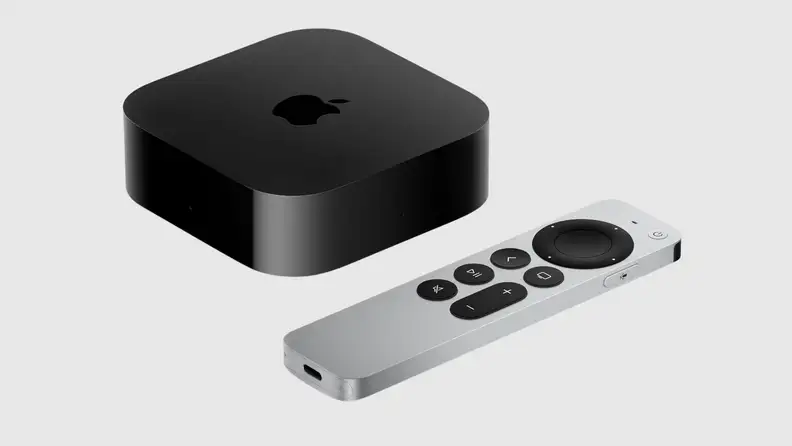
The Apple TV 4K (2026) runs on Apple’s A19 chip and supports Wi-Fi 7 and Thread.
The $299 Apple TV 4K (2026) with 128GB of storage is the most powerful streaming device on the market right now.
Apple claims its A19 chip offers up to 50% faster CPU performance and up to twice the GPU performance of the previous generation, plus hardware decoding for the efficient AV1 video format. Wi-Fi 7, Bluetooth 6, Thread smart-home networking, HDMI 2.1, and Gigabit Ethernet fill out a strong spec sheet.
Three far-field microphones enable hands-free Siri, with answers appearing over whatever you're watching, and Apple positions the system as responsive. The redesigned remote adds Precision Finding, which guides you to it with an iPhone 17 or later, iPhone Air, or iPhone Duo, plus a built-in speaker that can play a locating sound.
If you're looking for a streaming device you can set up and know will perform well for years to come, the Apple TV 4K is easily the one to beat.
Pros
-
A19 chip with faster CPU and GPU
-
Wi-Fi 7, Bluetooth 6, and Gigabit Ethernet
-
Far-field mics for hands-free Siri
-
Surround sound with four HomePods
-
Smart home hub for HomeKit and Matter
Cons
-
Steep $299 price
-
Only one configuration (128GB)
-
Design unchanged from the previous model
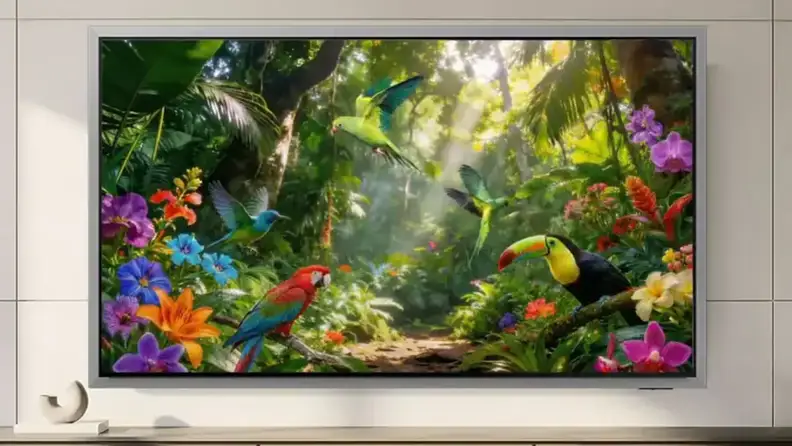
The S95H pairs a QD-OLED panel with high HDR brightness.
Few TVs combine brightness, panel quality, and software support as well as Samsung's OLED flagship. The $3,399 65-inch Samsung OLED S95H is the best all-around TV here.
Its QD-OLED panel combines OLED's pixel-level contrast with quantum dots for improved color. Four HDMI 2.1 ports support 4K/165Hz and variable refresh rate, with 9.7ms of input lag (the delay between a button press and the screen responding), so fast games feel immediate. Its HDR brightness produces vibrant, crisp highlights—well above last year's S95F.
Samsung dropped the separate One Connect box for this generation, so the ports now sit on the TV itself. For buyers, that means no extra box and fewer cables to hide behind the set. The silver FloatLayer frame around the screen is the main design touch, and it looks great.
Its brightness, QD-OLED panel, and long software support are what earn it this award.
Pros
-
Excellent peak brightness for an OLED
-
Glare Free matte anti-reflective screen
-
Very accurate out of the box
-
165Hz gaming support
-
Wireless One Connect ready
Cons
-
No Dolby Vision
-
FloatLayer design won't suit everyone
-
Modest upgrade over the S95F
The Govee TV Backlight 3 creates a more immersive viewing experience without the cost of an HDMI pass-through setup.

TV lighting that tracks the picture usually means a pricey smart-light ecosystem, so Govee's strip is a welcome shortcut. The $109.99 Govee TV Backlight 3 for 55–65-inch TVs, or $139.99 for 75–85-inch sets, gets surprisingly close to the Philips Hue effect without the Philips Hue bill. The strip creates a colored glow behind the TV that follows what's on screen, which makes the picture feel more immersive. A camera mounted on the TV watches the picture and tells the light strip which colors to show.
Govee's dual-lens, 4-megapixel camera is, Govee says, about 30% clearer than the previous 2-megapixel version. The strip packs 60 RGBWIC LEDs per meter (about 18 per foot), including a dedicated white channel, with 24 independently controlled zones (different sections can show different colors at once) and roughly 20% more brightness than the T2, according to Govee. The strip also supports Matter, a shared smart-home standard, so it works with Alexa, Google Home, Siri, and SmartThings.
In our testing, installation took about 20 minutes. The camera's sensor captures at 30 fps, so the colors it reads update up to 30 times per second. Because it reads the screen rather than an HDMI signal, it works with whatever's on screen, from built-in TV apps to consoles and streamers, without plugging anything else in.
Its camera-driven color sync and Matter support are what earn it this award.
Pros
-
Bright and accurate
-
Easy-to-use app
-
Relatively easy installation
-
Inexpensive compared to other types of TV backlights
Cons
-
Cameras can introduce inconsistencies
The G6 supports variable refresh rates up to 165Hz across all four HDMI 2.1 ports.
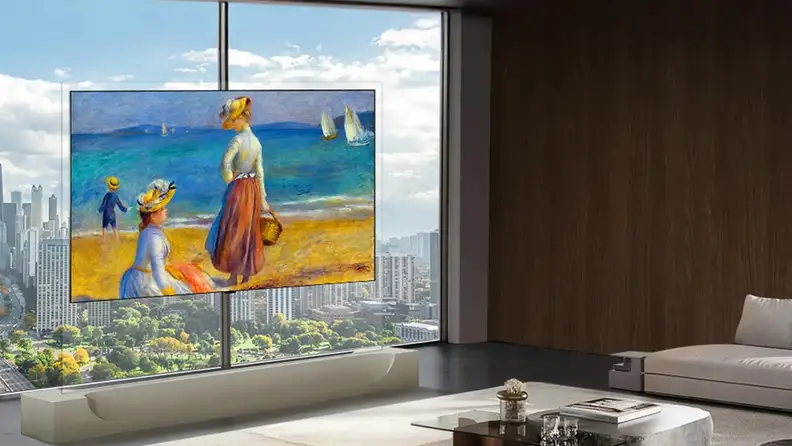
Gamers who want a top-tier OLED will find it hard to beat the LG OLED Evo G6. All four HDMI 2.1 ports support 4K/120Hz, with variable refresh rate up to 165Hz, FreeSync, G-Sync, and Dolby Vision Gaming. In plain terms, that's every modern feature you'd want from a gaming TV in 2026. Input lag is low, too, so games feel responsive and smooth.
HDR brightness matches the rest of the 2026 OLED competition and beats last year's LG G5. The picture feels immersive, and it holds up well in a bright room.
Ultimately, the LG OLED Evo G6 combines excellent image quality and great gaming features to make for the best living-room gaming experience you can get right now.
Pros
-
Outstanding brightness for an OLED
-
Reflection Free Premium certified
-
165Hz VRR with G-Sync and FreeSync Premium
-
Flush wall mount included
-
5-year panel warranty
Cons
-
No stand in the box
-
Pricier than the LG C6
-
Colors benefit from calibration
The W6’s 9mm panel is thin enough to sit nearly flat against the surface it’s mounted on.
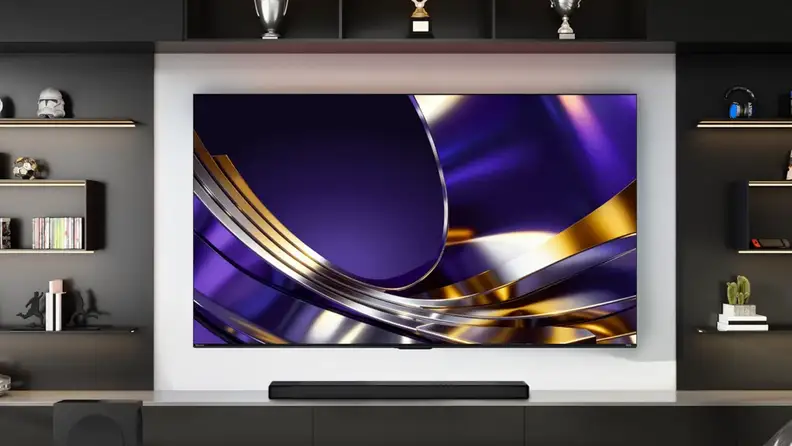
LG's W6 takes the wall-mounted TV idea furthest by making the setup cable-free. The $5,499.99 77-inch LG OLED Evo W6 and $7,499.99 83-inch version use a 9mm panel that mounts flush to the wall. Sources plug into the Zero Connect Box, which LG says wirelessly transmits visually lossless 4K video and audio from up to 32 feet away. That's impressive for an entirely wireless connection.
The W6 shares its panel and Alpha 11 Gen3 processor with the G6, including 4K/165Hz and variable refresh rate support, so expect a broadly similar picture. In other words, it offers some of the best picture quality you can get right now—on 77-inch and larger screens.
Pros
-
Ultra-thin 9.9mm flush-mount design
-
Zero Connect Box sends 4K video wirelessly
-
Reflection Free Premium certified
-
165Hz VRR gaming support
-
Brightness Booster Ultra
Cons
-
$1,000 premium over the G6
-
Only 77- and 83-inch sizes
-
Designed for wall mounting only
The U7SG’s matte anti-glare coating cuts reflections, which helps in bright rooms.
Big-screen performance doesn't have to cost a fortune, and the Hisense U7SG proves it. The 65-inch model lists at $1,499, which makes its feature set an even better value.
Hisense claims about 3,000 Mini-LED dimming zones and 3,000-nit peak brightness. A native 165Hz panel, four HDMI 2.1 ports, and a matte anti-glare coating (which cuts reflections) make it a strong pick for gaming in bright rooms. Compared to the TCL QM7L, the Hisense is brighter and has four HDMI 2.1 ports to the TCL's two. It's also a clear step up from the TCL QM7K for gaming.
Its Devialet-tuned 50W 2.1.2 sound system adds a subwoofer and two height channels, making the built-in speakers more usable in a pinch, though a dedicated soundbar or sound system still sounds better.
Its brightness, port count, and screen size per dollar are what earn it this award.
Pros
-
Excellent HDR and SDR brightness
-
Native 165Hz, up to 330Hz at 1080p
-
2.1.2 speakers with up-firing Atmos channels
-
Dolby Vision IQ and HDR10+
-
ATSC 3.0 tuner
Cons
-
Narrow viewing angles
-
Motion handling is just decent
Related content
-
The Best Wireless Earbuds of 2026best-right-now
-
The Best Headphones of 2026best-right-now