

Circadian Organic Wool Pillow Review
I slept on a wool pillow—it provided customizable comfort but with a learning curve

I have five pillows on my bed, and before you ask, yes, they all serve a purpose. Two do most of the heavy lifting, with a softer pillow for my head and a firmer one that I spoon throughout the night. I've gotten particular about this arrangement, so convincing me to switch things up is a tall order. Then I got my hands on the Circadian Organic Wool Pillow (available at Circadian) , which introduced something I'd never had to do with a pillow before: remove part of it. The thing comes packed with wool, and it's up to you to figure out how much of that stuffing you want to sleep on. Circadian also says the wool helps manage moisture overnight, which sounded promising considering how hot I tend to get in bed. At $209, I was hoping for something that could give my current, trusty pillows some competition.
-
About the Circadian Organic Wool Pillow
-
How we tested
-
What we like
-
What we don't like
-
Warranty
-
Should you buy the Circadian Organic Wool Pillow?
-
Related content
Pros
-
Customizable firmness and height
-
Soft organic cotton cover
-
Breathable, moisture-wicking wool
-
60-night sleep trial
Cons
-
Requires trial and error to adjust
-
Expensive
About the Circadian Organic Wool Pillow
- Fill: Organic wool sourced from New Zealand
- Cover: Sateen-weave organic cotton
- Sizes: Standard (20 x 26 inches), Queen (20 x 30 inches), King (20 x 36 inches), and Travel (12 x 16 inches)
- Firmness: Adjustable
- Price: $209 for the standard size
- Certification: GOTS-certified organic, according to Circadian
- Care: Machine-washable cover; wool filling isn't machine-washable
The wool in Circadian's pillow comes from organic farms in New Zealand, and a zipper along one of the shorter ends opens to reveal the filling inside. Unlike a traditional pillow, where you're stuck with whatever firmness you bought, this one lets you make some changes yourself.
Circadian doesn't skimp on the stuffing, either. The brand says it includes roughly 30% more wool than most people end up keeping, and that a majority of people get three to five years out of it. There's also a handy online guide that explains how to tackle the filling and offers suggestions based on how you sleep. It's worth checking out before you start digging around inside, especially if you've never owned an adjustable pillow before.
How we tested
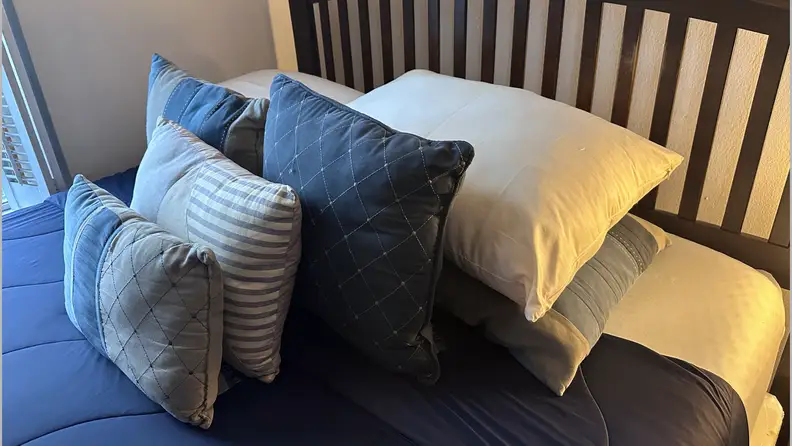
A week and a half of nights alongside the pillows I already use showed how it stacked up against the competition.
I slept on the standard-size Circadian Organic Wool Pillow for about a week and a half, comparing it with the other pillows I normally use.
I'm primarily a right-side sleeper, although I'll occasionally end up on my stomach, sprawled across the bed with one leg tucked toward my chest. It's not graceful, but it's comfortable.
Whenever it came time to snuggle up against the Circadian pillow, I paid attention to a few things: how my head and neck felt, whether I was constantly shifting around to get comfortable, and whether the wool made any difference in keeping me from overheating.
What we like
You can adjust the height until it feels right
Most pillows don't give you much say in how they feel once you get them home. You find one that looks comfortable, buy it, and hope for the best. Circadian lets you get more hands-on, which I appreciated once I realized how much wool I was dealing with—and trust me, there's plenty.
I lay down and immediately understood why Circadian recommends taking some of the filling out. My head sank into a shallow dip, but the rest of the pillow stayed puffed up around it. My neck wasn't a big fan of the position I was in, and I could tell quickly that spending an entire night like that wasn't going to work for me.
So I unzipped it and got to work. Two substantial clumps of strategically removed wool later, I finally had something closer to the pillow height I'm used to. It was a noticeable improvement over that first attempt, when I felt like my head was surrounded by more stuffing than it knew what to do with.
I didn't enjoy the process of getting there, but I do appreciate that Circadian gives you the option. Had I been stuck with the amount of wool it originally came with, I probably would've ruled it out after the first night.
It kept my sweaty-sleeper tendencies in check
I sleep hot enough that any pillow advertising cooling benefits will get my attention. I've also tried enough of them to know that the word cooling doesn't always mean much once your head's been resting in the same spot for several hours.
Circadian relies on the wool itself rather than a cooling gel or special fabric treatment. According to the brand, the fibers can absorb moisture equivalent to as much as 30% of their weight without feeling wet. The idea is that the wool helps deal with the moisture that comes with spending a whole night with your face pressed against a pillow.
During my test, I never woke up with a sweaty pillow, which I'll gladly take. I didn't experience any dramatic burst of coolness when I lay down, either. The temperature was unremarkable throughout the night—and in this case, I mean that as a compliment.
The cotton cover made a great first impression

The organic cotton cover is soft against the face, and the new-pillow smell disappeared after one wash.
The wool and I needed time to get acquainted. The cotton cover? We got along just fine. I normally rest my head on the softer of my pillows, and I was happy to find that Circadian's organic cotton felt good against my face right from the start.
I also noticed a scent when I first unpacked the pillow, but nothing that made me question what I'd just brought into my bed. It smelled like it had just come out of the package, and after I washed the cover, it was gone, which was one less thing to worry about while I figured out what to do with all that wool.
What we don't like
Finding the right amount of wool takes patience

Getting the height right means pulling out wool a handful at a time, and then finding a place to store what’s left over.
I love the idea of choosing exactly how much filling goes into my pillow, but figuring out that amount was far less fun.
Circadian has an online guide to help you through the process, so you're not on your own. My problem was less about understanding what to do and more about figuring out when I'd done enough. There was a lot of reaching inside, pulling some out, checking the height, and deciding whether I needed to keep going, which is far more involvement than I'm used to from a pillow.
Then came the question of what to do with all the leftover wool. Circadian offers some pro tips on storing it in case you want to add some back later, but that still leaves me with a bunch of stuffing I need to find a home for. I'm used to finding room for a new pillow, but not for its spare parts.
Sleep-wise, I also needed to reposition myself more frequently during the first few nights. That's not unusual for me, but after years of snoozing on other pillows, the wool took some getting used to. Thankfully, I never had to get up in the middle of the night to perform another round of pillow surgery.
The price and maintenance won't appeal to everyone
At $209, the Circadian is a lot to spend on a pillow, particularly one that requires some work before you're ready to sleep on it. Circadian's organic materials and adjustable construction add to its appeal, but that price will understandably give some shoppers pause.
There's also more upkeep involved than tossing your pillow in the wash. You can machine-wash the cotton cover on a cold, gentle cycle and let it air-dry, but the filling needs to come out first and stay dry. Circadian also recommends giving the pillow a weekly fluff to keep the wool distributed evenly.
Warranty
Circadian offers a 60-night sleep trial, giving you time to experiment with the filling and decide whether the pillow suits how you sleep.
If you decide it's not for you, Circadian says it will provide a prepaid return label, no restocking fee, and a refund once it receives the return. The brand also covers shipping on the original order.
Should you buy the Circadian Organic Wool Pillow?
Yes, if you want a customizable pillow and don't mind some extra effort

For particular sleepers who don’t mind a little hands-on setup, a pillow you can customize is worth the effort.
It wasn't love at first lie-down, but once I adjusted the wool to a height that suited me better and got used to the filling, I enjoyed the pillow much more. At $209, it's still a purchase worth thinking through, and anyone who wants to pull a pillow out of the packaging and immediately go to sleep might find the setup more trouble than it's worth.
Still, I think the Circadian Organic Wool Pillow (available at Circadian) is worth considering if you're particular about your sleeping setup. I appreciate being able to decide how much wool works for me, and the company's online guide is a useful resource if you're unsure how to get started. Plus, the 60-night trial gives you plenty of time to get acquainted with the pillow before deciding whether it's a keeper.
Just make sure you have somewhere to put the extra wool. That part, unfortunately, is up to you.
Related content
-
 The Best Pillows for Side Sleepers of 2026
 best-right-now
-
 The Best Pillows of 2026
best-right-now


Meet the tester

Sean Abrams
Contributor
Sean Abrams is a New York-based writer and editor with more than a decade of experience covering lifestyle and fitness, food, travel, and product reviews. From running shoes and clothing to luggage and everyday essentials, he takes a hands-on approach to testing, with an eye for telling whether something is actually worth the money.
In addition to Reviewed, his work has appeared in GQ, Men's Health, Runner's World, Delish, and Yahoo Shopping.
Checking our work.
Our team is here to help you buy the best stuff and love what you own. Our writers, editors, and experts obsess over the products we cover to make sure you're confident and satisfied. Have a different opinion about something we recommend? Email us and we'll compare notes.
Shoot us an email